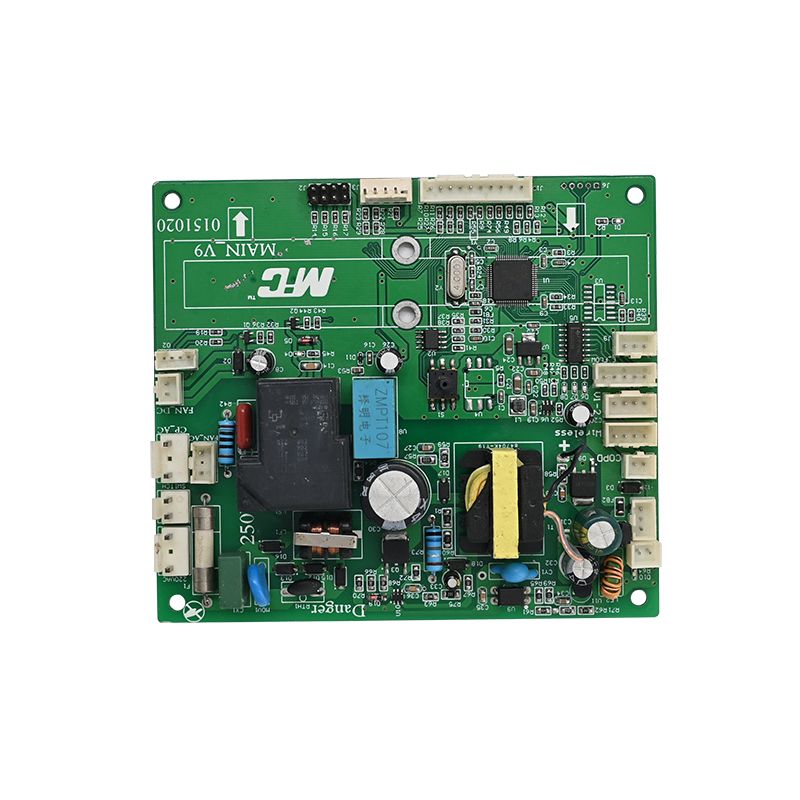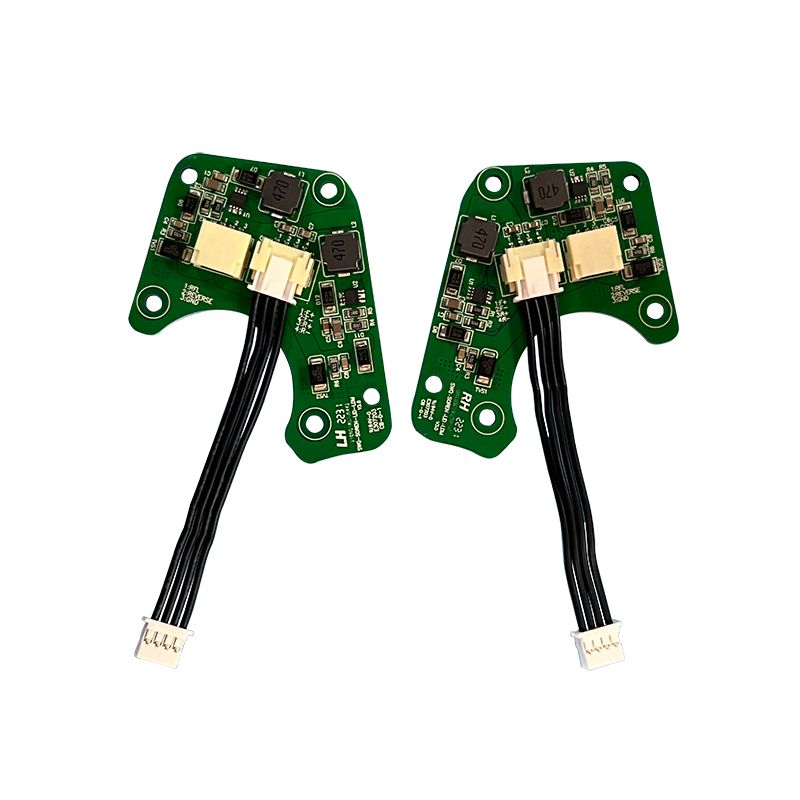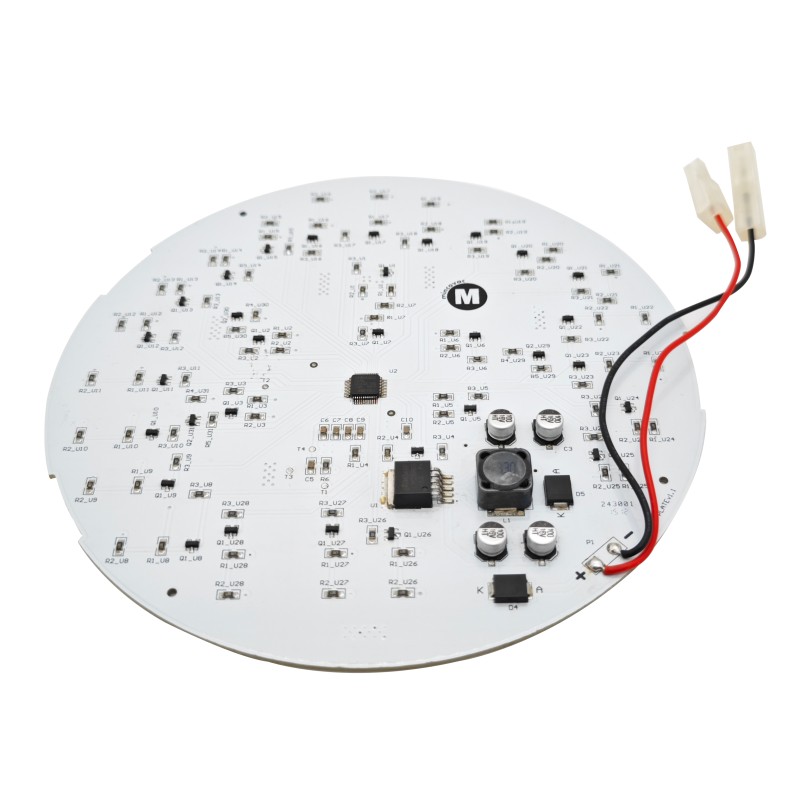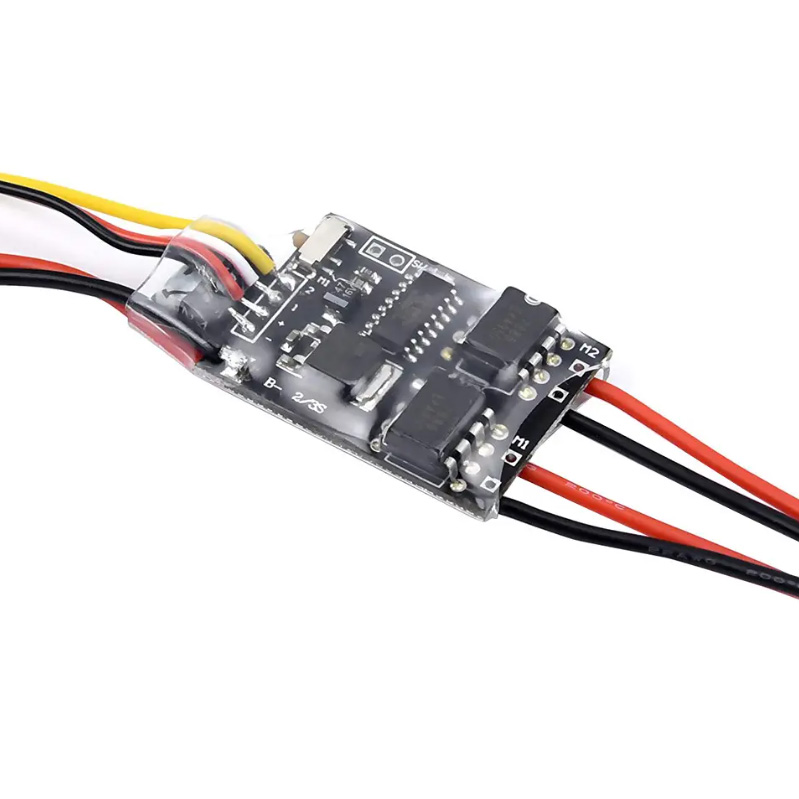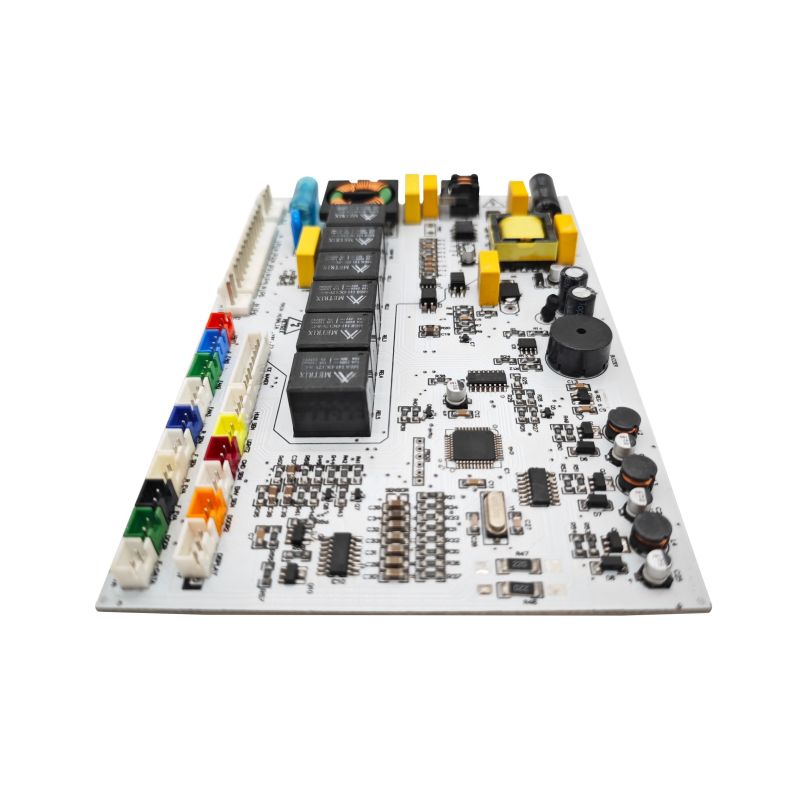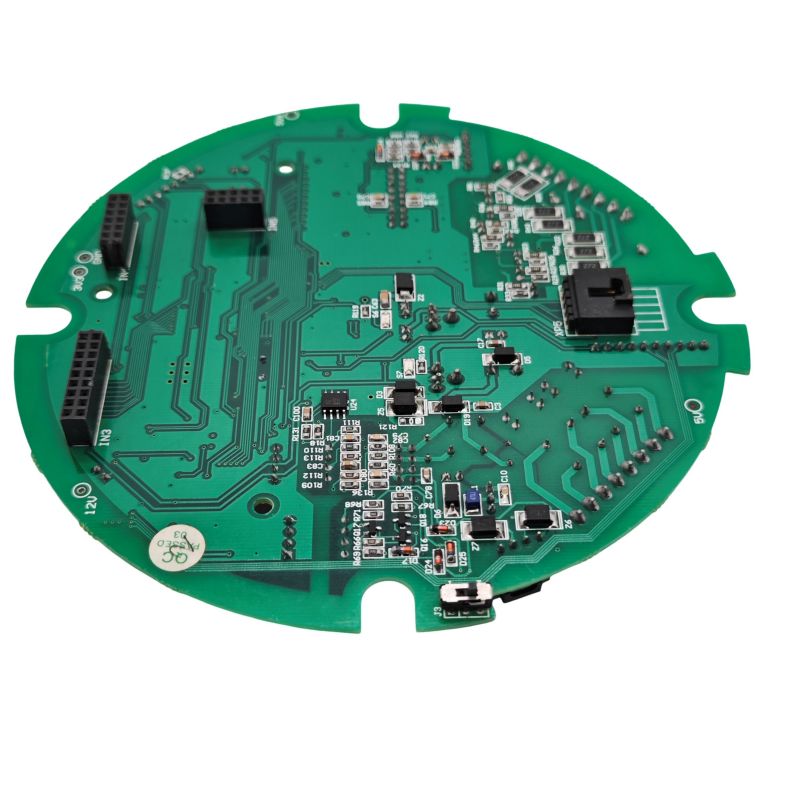
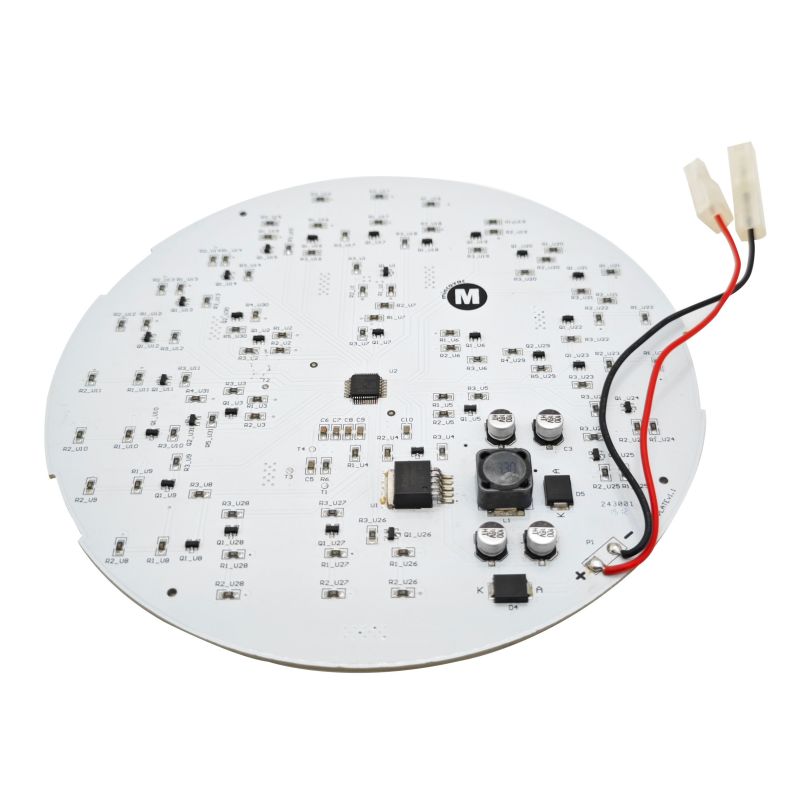
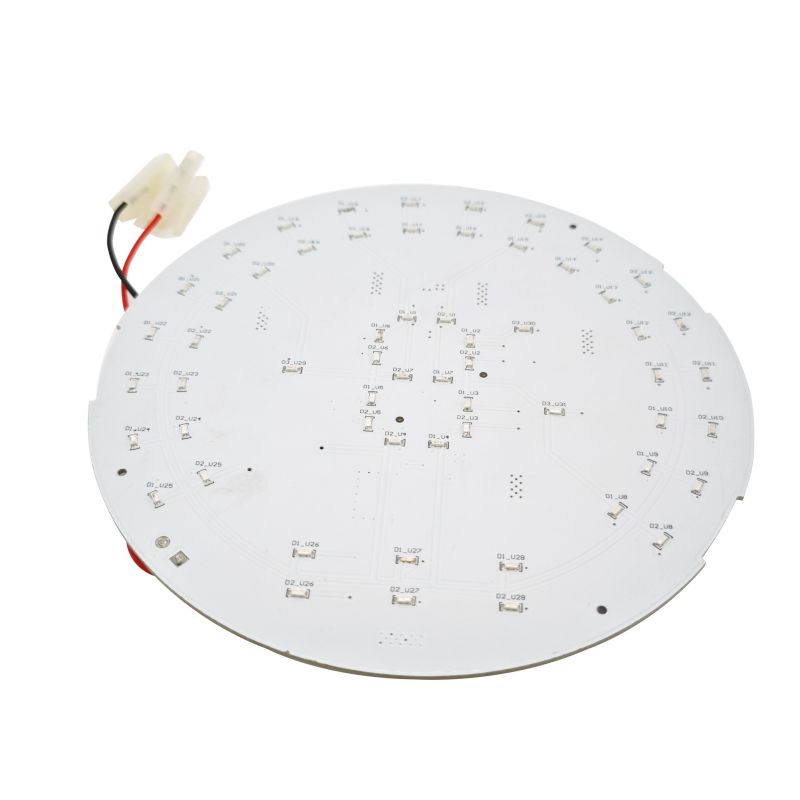
How to Make a Reliable Planting Light PCBA
Planting lights (horticultural LED fixtures) operate under demanding conditions: 12-16 hour continuous daily operation, high humidity environments (60-90% RH), and significant thermal stress. The PCBA is the backbone of the entire fixture---failure here means crop loss and wasted energy.
With 20 years of experience in power electronics and PCB manufacturing across industrial and agricultural sectors, I have analyzed hundreds of grow light field failures. This guide covers material selection, thermal management, spectrum design, and proven reliability parameters for planting light PCBA.
What a Planting Light PCBA Must Do
A planting light PCBA supports plant photosynthesis through artificial light. Unlike standard lighting, horticultural PCBA must deliver specific wavelengths (red for flowering, blue for vegetative growth) while managing continuous high-power operation.
Essential functions of a planting light PCBA:
- Spectral output control: Drives LED chips at precise wavelengths (660nm red, 450nm blue) with deviation ≤±5nm
- Thermal dissipation: Removes heat from LED junctions to prevent premature lumen depreciation
- Power regulation: Converts AC input (85-265V) or DC input (12-52V) to stable constant current for LED strings
- Environmental protection: Withstands greenhouse humidity and temperature swings
Key difference from standard LED PCBA: Planting light PCBAs require higher power density (40W to 200W+ per board) and specific spectrum tuning for different crop types.
Core Technical Specifications
Spectral Requirements by Growth Stage
Growth StageDominant WavelengthTypical Red:Blue RatioApplicationVegetative (leaves/stems)450nm (blue)3:1 to 4:1Lettuce, herbs, leafy greensFlowering / Fruiting660nm (red)5:1 to 9:1Tomatoes, peppers, cannabisFull Spectrum400-700nm + whiteVariableSupplemental greenhouse lighting
Based on current horticultural LED standards and manufacturer specifications.
Electrical & Power Specifications
ParameterLow Power (Home/DIY)Mid Power (Commercial)High Power (Vertical Farm)Total Power10W-40W40W-120W120W-300W+Input Voltage12V-24V DC45-52V DC48V DC or AC 85-265VLED Current per Channel350mA-700mA700mA-1500mA1500mA-2800mACurrent Deviation±5%±2%±1%Power Conversion Efficiency>85%>90%>93%
Power ranges derived from commercial planting light PCBA specifications.
Physical & Thermal Specifications
ParameterFR4 StandardAluminum MCPCBCopper MCPCBThermal Conductivity0.3-0.5 W/m·K1-9 W/m·K200-400 W/m·KCopper Weight1 oz1-2 oz2-3 ozLayer Count2-4 layers1-2 layers1-2 layersMaximum Operating Temp130°C (Tg)60°C surface70°C surfaceTypical ApplicationLow-power (<30W)Most commercial lightsExtreme high-power
Based on PCB manufacturing standards for horticultural applications.
PCB Material Selection: Critical for Reliability
The choice of PCB material directly determines planting light lifespan and performance.
Aluminum MCPCB (Most Common for Planting Lights)
Aluminum MCPCBs account for over 80% of commercial planting light PCBAs. They offer the best balance of thermal performance and cost.
ParameterStandard AluminumHigh-Performance AluminumThermal Conductivity1-3 W/m·K5-9 W/m·KDielectric Layer Thickness50-100µm75-150µmBreakdown Voltage2-3 kV3-5 kVCost per m² (bulk)~$30~$50
When to choose aluminum: Most commercial planting lights from 40W to 200W. The 1-3 W/m·K aluminum PCB is sufficient for standard LED densities.
FR4 (Cost-Sensitive or Low-Power)
FR4 planting light PCBAs are suitable only for:
- Low-power fixtures under 30W
- Designs with external heatsinks
- Short-term or hobbyist applications
Limitation: FR4 cannot dissipate heat effectively. LED junction temperatures rise 15-25°C higher than equivalent aluminum MCPCB designs.
Ceramic PCBA (Premium / High-Reliability)
Ceramic substrates (alumina or aluminum nitride) eliminate the dielectric layer entirely, achieving thermal conductivity of 20-200+ W/m·K.
Best for: Extreme high-power density (>3 W/cm²) or applications requiring absolute reliability.
Thermal Management for Continuous Operation
Planting lights operate 12-16 hours daily, 365 days per year. Thermal management is the #1 reliability factor.
Thermal Path Optimization
Rule of thumb: For every 10°C reduction in LED junction temperature, lifespan doubles.
Design ElementRequirementVerification MethodThermal vias under LED padsMinimum 9 vias (0.3mm diameter) per LEDX-ray inspectionVia fillingFilled and capped with copper or epoxyCross-sectionCopper area for heat spreading300-500mm² per high-power LEDPCB layout reviewSolder coverage on thermal pad80-90% coverage (no large voids)X-ray, void <25%Surface temperature (at full load)Below 60°C (LED pad area)Thermal imaging
Thermal Interface Material (TIM)
Between the MCPCB and fixture heatsink:
- Required TIM: Silicone or ceramic thermal pad (minimum 3 W/m·K)
- Thickness: 0.5mm to 1.5mm
- Compression: 20-30% to eliminate air gaps
Copper Weight for Current Traces
Current per TraceMinimum Copper WeightRecommended Copper Weight<500mA1 oz1 oz500mA-1.5A1 oz2 oz1.5A-3A2 oz2 oz with solder opening3A+2 oz with parallel traces3 oz
Based on IPC-2221 current capacity standards for horticultural lighting.
Spectrum Design and Wavelength Control
Plants require specific light spectra for different growth stages. The PCBA must deliver these wavelengths with precision.
Standard Wavelengths for Planting Lights
WavelengthColorFunctionLED Chip Type450-460nmRoyal BlueVegetative growth, chlorophyll absorptionBlue LED660-665nmDeep RedFlowering, fruiting, photomorphogenesisRed LED730-740nmFar RedEmerson effect, flowering initiationFar Red LED3000K-5000KWhiteFull spectrum, visual comfortWhite LED
Red:Blue Ratio Recommendations
Plant TypeRecommended Red:Blue RatioNotesLeafy greens (lettuce, spinach)3:1 to 4:1Higher blue for compact growthFruiting plants (tomatoes, peppers)5:1 to 9:1Higher red for flower/fruit developmentHerbs (basil, cilantro)4:1 to 6:1Balanced spectrumFull-cycle cannabis4:1 (veg) to 8:1 (flower)Adjustable spectrum preferred
Based on horticultural LED design guidelines from industry sources.
Current Control for Wavelength Stability
LED wavelength shifts with current variation. To maintain spectral accuracy:
- Maximum current deviation: ±2% across all LED strings
- Recommended deviation: ±1% for premium designs
- Measurement method: Series resistor voltage drop or inline current meter
Driver Topology and Circuit Design
Constant Current vs. Constant Voltage
Planting light PCBAs require constant current drive for each LED string to maintain stable wavelength and prevent thermal runaway.
TopologyBest ForAdvantagesDisadvantagesLinear constant currentLow power (<30W)Simple, low EMIInefficient at high voltage dropBuck converterMedium power (30-100W), Vin > VfEfficient (90-95%)Requires inductor, switching noiseBoost converterLED strings with Vf > VinStep-up capabilityHigher component countMulti-channel constant currentHigh power (>100W), tunable spectrumIndividual channel control, high efficiencyComplex, higher cost
Protection Circuits Required
Protection TypeComponentSpecificationReverse polaritySchottky diode or P-FETBlocks negative voltage at inputOver-voltageTVS diodeClamp at 1.2x max inputOver-current (per channel)PTC fuse or sense resistor + cutoffTrip at 1.3x nominal currentESD protectionZener diodes on inputs±8kV minimum
Environmental Protection for Grow Rooms
Planting lights operate in high-humidity environments (60-90% RH). Moisture protection is mandatory for reliable operation.
Conformal Coating Requirements
Coating TypeBest ForApplication MethodReworkabilityAcrylic (AR)General horticulturalSpray or dipEasySilicone (SR)Extreme humidity, flexible PCBSelective sprayDifficultUrethane (UR)Saltwater or chemical exposureSprayVery difficult
Minimum coating thickness: 0.03mm (1.2 mils)
Moisture Protection Checklist
- Conformal coating over all solder joints and exposed copper
- Potting for connectors and high-voltage areas (optional for extreme environments)
- Sealed connectors (IP65 minimum for outdoor or high-humidity greenhouses)
- ENIG surface finish (prevents copper corrosion; HASL is not recommended)
Operating Environment Limits
ParameterIndoor GrowGreenhouseOutdoorHumidity range40-70% RH60-90% RH10-100% RHTemperature range15-30°C-5 to 40°C-20 to 50°CMinimum IP ratingIP20 (indoor dry)IP44 (splash)IP65 (weatherproof)
Planting Light PCBA Layout Rules
Rule 1: Separate Power and Signal
- Keep AC/DC input section isolated from LED drive traces
- Minimum creepage distance: 3mm between high-voltage and low-voltage areas
Rule 2: Shorten High-Current Loops
- Place LED drivers as close as possible to LED connectors
- Minimize loop area to reduce EMI
Rule 3: Thermal Pad Design for LEDs
- Each LED thermal pad requires minimum 9 thermal vias (0.3mm)
- Vias must be filled and capped for solderability
Rule 4: Copper Pour for Ground
- Use solid ground plane on layer 2 (for 2-layer MCPCB, ground is the metal core)
- For FR4 designs: dedicated ground layer with minimal splits
Rule 5: Daisy-Chain Power Distribution
- For long linear planting light PCBAs (up to 1500mm), route power traces as a central bus
- Feed each LED segment from the bus, not from the end of the previous segment
Manufacturing and Assembly Requirements
SMT Assembly Specifications for Planting Light PCBA
ParameterRequirementVerificationSolder pasteLead-free (SAC305 or similar)RoHS compliance
Quality Testing for Planting Light PCBA
TestMethodPass/Fail CriteriaIn-circuit test (ICT)Automated probe fixtureAll components present, correct valuesLED polarity checkDiode mode or visual inspection100% correct orientationThermal imaging at full loadIR camera after 1 hour operationNo hotspot >70°C (LED pads <60°C target)Spectral verificationSpectrometer (0.1nm resolution)Wavelength deviation ≤±5nm from specBurn-in test24-48 hours at full power, room ambientNo LED failure, no flicker
For commercial planting light PCBA production, 100% testing of these parameters is recommended:
- LED polarity check (automated optical inspection)
- Solder joint quality (AOI on all power components)
- Open/short testing (flying probe or bed-of-nails)
- Thermal validation (sample basis, 10% of production)
Planting Light PCBA FAQs
Q1: What is the best PCB material for a high-power (200W+) planting light that runs 18 hours daily?
A: For high-power continuous operation, aluminum MCPCB with minimum 3 W/m·K thermal conductivity is the standard choice. Here is the decision matrix based on real field data:
Power LevelRecommended MaterialThermal ConductivityExpected Lifespan40W-100WStandard aluminum MCPCB (1-2 W/m·K)1-2 W/m·K30,000-50,000 hours100W-200WHigh-performance aluminum (3-5 W/m·K)3-5 W/m·K50,000-70,000 hours200W-300W+Premium aluminum (5-9 W/m·K) or copper core5-9+ W/m·K70,000-100,000 hours
Why aluminum over FR4 for high power: A 200W planting light generates significant heat. FR4 has thermal conductivity of only 0.3-0.5 W/m·K, acting as an insulator. The LED junction temperature will exceed 100°C within minutes, causing rapid lumen depreciation (30-50% loss within 6 months).
Ceramic PCBA alternative: For extreme reliability or when PCB size is severely constrained (high power density >3 W/cm²), ceramic substrates (alumina or aluminum nitride) eliminate the dielectric layer entirely, achieving 20-200+ W/m·K. However, cost is 3-5x higher than aluminum MCPCB.
Bottom line for most commercial growers: High-performance aluminum MCPCB (5 W/m·K) provides the best balance of cost and reliability for 200W+ fixtures.
Q2: How do I calculate the required copper weight for my planting light PCBA to prevent trace overheating?
A: Use the IPC-2221 formula with these horticulture-specific guidelines. Trace overheating is a common failure mode in high-power planting lights.
Step 1 - Determine your maximum current per trace:
For a typical 100W planting light at 48V: Current = 100W / 48V = 2.08A per string
Step 2 - Choose your allowable temperature rise (ΔT):
- 10°C rise: Conservative for 50,000+ hour life (recommended for commercial)
- 20°C rise: Acceptable for consumer-grade
- 30°C rise: High risk---trace will weaken solder joints over time
Step 3 - Select copper weight based on current:
Current1 oz Copper Required Width (ΔT=20°C)2 oz Copper Required Width (ΔT=20°C)Recommendation1A30 mils (0.76mm)15 mils (0.38mm)1 oz acceptable2A70 mils (1.78mm)35 mils (0.89mm)2 oz preferred3A120 mils (3.05mm)60 mils (1.52mm)2 oz minimum5A220 mils (5.59mm)110 mils (2.79mm)3 oz recommended
Step 4 - Calculate using the simplified formula (for external traces, 2 oz copper):
Width (mils) = Current (Amps) × 35 (for ΔT=20°C)
Example for 2.08A: 2.08 × 35 = 73 mils (1.85mm) minimum width
Adding 20% safety margin: 73 × 1.2 = 88 mils (2.23mm)
Professional recommendation for planting light PCBA:
- Use 2 oz copper minimum for all traces carrying >1A
- Use 3 oz copper for traces carrying >3A or when board space is limited
- Add solder mask opening on high-current traces---additional solder increases current capacity by 20-40%
Verification method: After prototype assembly, measure trace temperature with an infrared camera at full load. If any trace exceeds 70°C, increase copper weight or widen trace.
Q3: What causes uneven light output or flickering in planting light PCBA, and how do I fix it?
A: Uneven light output and flickering are typically caused by current mismatch between parallel LED strings or insufficient bulk capacitance. Here is the diagnostic sequence:
Root cause 1 - Current mismatch in parallel strings (most common):
When multiple LED strings are connected in parallel to a single constant current driver, small differences in forward voltage (Vf) cause one string to draw more current than others. The hottest string draws the most current, heats up further (Vf drops with temperature), and draws even more current---thermal runaway.
Solution:
- Use a separate constant current driver per string (preferred for high-power)
- Or add balancing resistors (0.5-2Ω) in series with each string to equalize current
- Resistor wattage: P = I² × R (e.g., 1A² × 1Ω = 1W resistor)
Root cause 2 - Insufficient bulk capacitance at driver output:
Pulse-width modulated (PWM) dimming creates visible flicker if the output capacitance is too small. The LED current rises and falls with each PWM cycle.
PWM FrequencyMinimum Bulk CapacitanceFlicker Visibility100-200 Hz1000µF+Visible to most people500-1000 Hz470µFFlicker detectable by some1000-4000 Hz100µFGenerally flicker-free>4000 HzNot requiredNo visible flicker
Fix: Add 100-470µF electrolytic capacitor across the LED output, plus 10µF ceramic capacitor for high-frequency filtering.
Root cause 3 - Poor solder joints on LED connections:
A cracked or cold solder joint on an LED pad creates intermittent connection. The LED may flicker, dim, or completely fail as the board heats and cools.
Detection method:
- Tap each LED gently with a plastic tool while the light is running
- If flickering occurs, reflow the solder joint
- For SMT LEDs, inspect under magnification for cracks around the pad
Root cause 4 - Inadequate trace width causing voltage drop:
Long, narrow traces on high-power strings create voltage drop. The LEDs at the far end of the trace receive less current than those near the driver.
Fix:
- Calculate voltage drop: V_drop = I × R_trace
- For a 2A string on a 100mil (2.54mm) 1oz trace over 24 inches: R ≈ 0.24Ω, V_drop ≈ 0.48V
- This may be acceptable. For V_drop >0.5V, increase trace width or use 2oz copper
Quick validation: Measure voltage at the first LED and last LED in each string. If difference exceeds 0.3V, upgrade trace design.
Production Testing Checklist for Planting Light PCBA
Before approving a planting light PCBA for mass production, verify these five tests:
| Test | Method | Pass/Fail Criteria |
|---|---|---|
| Spectral output | Integrating sphere or spectrometer | Wavelength deviation ≤±5nm from target |
| Thermal performance | IR camera after 1 hour at full load | No point >70°C; LED pads <60°C |
| Current balance | Measure current in each parallel string | Deviation between strings <5% |
| Humidity resistance | 85% RH at 40°C for 48 hours, powered | No corrosion, no flicker, no failure |
| Lifespan verification (accelerated) | 85°C/85% RH, 1000 hours (THB test) | Lumen depreciation <10% |
For commercial orders: Request PPAP (Production Part Approval Process) documentation including thermal imaging reports and spectral verification data.
Summary: Reliable Planting Light PCBA Checklist
Design ElementRequirementPCB materialAluminum MCPCB (1-9 W/m·K) for most; FR4 only for low power (<30W)Copper weight2 oz minimum for power traces; 1 oz for signalThermal management9+ thermal vias per LED; TIM between PCBA and heatsink; surface temp <60°CSpectrum controlRed (660nm), Blue (450nm); ratio based on crop; current deviation <±2%Driver topologyConstant current per string; separate driver channels for spectrum tuningMoisture protectionConformal coating (acrylic or silicone); ENIG surface finish; sealed connectorsCurrent balancingSeparate drivers or balancing resistors for parallel stringsCertificationsRoHS, UL (for commercial fixtures)TestingSpectral, thermal, current balance, humidity resistance, THB accelerated aging
A reliable planting light PCBA combines proper thermal management (aluminum MCPCB, 2+ oz copper, thermal vias), precise spectrum control (constant current drive, wavelength deviation ≤±5nm), and environmental protection (conformal coating, sealed connectors). The most common field failures---uneven light output, flickering, and premature LED failure---trace to inadequate thermal design or current mismatch between parallel strings. Prioritize 2 oz copper, separate constant current drivers per channel, and thermal validation testing to achieve 50,000+ hour operation in commercial growing environments.