- English
- Español
- Português
- русский
- Français
- 日本語
- Deutsch
- tiếng Việt
- Italiano
- Nederlands
- ภาษาไทย
- Polski
- 한국어
- Svenska
- magyar
- Malay
- বাংলা ভাষার
- Dansk
- Suomi
- हिन्दी
- Pilipino
- Türkçe
- Gaeilge
- العربية
- Indonesia
- Norsk
- تمل
- český
- ελληνικά
- український
- Javanese
- فارسی
- தமிழ்
- తెలుగు
- नेपाली
- Burmese
- български
- ລາວ
- Latine
- Қазақша
- Euskal
- Azərbaycan
- Slovenský jazyk
- Македонски
- Lietuvos
- Eesti Keel
- Română
- Slovenski
- मराठी
- Srpski језик

Next-Generation Baby Monitor PCBA Solution: Redefining the Boundaries of Safety and Intelligence
As young parents worldwide continue to raise the bar for infant safety, baby monitors have evolved far beyond simple audio listening devices. Today's parents demand high-definition video, two-way talk, temperature and humidity sensing, and intelligent alert systems—all integrated into a single, reliable device. At the heart of this technological evolution lies the PCBA (Printed Circuit Board Assembly) , which serves as the monitor's "central nervous system," directly determining product stability, power efficiency, and signal penetration.
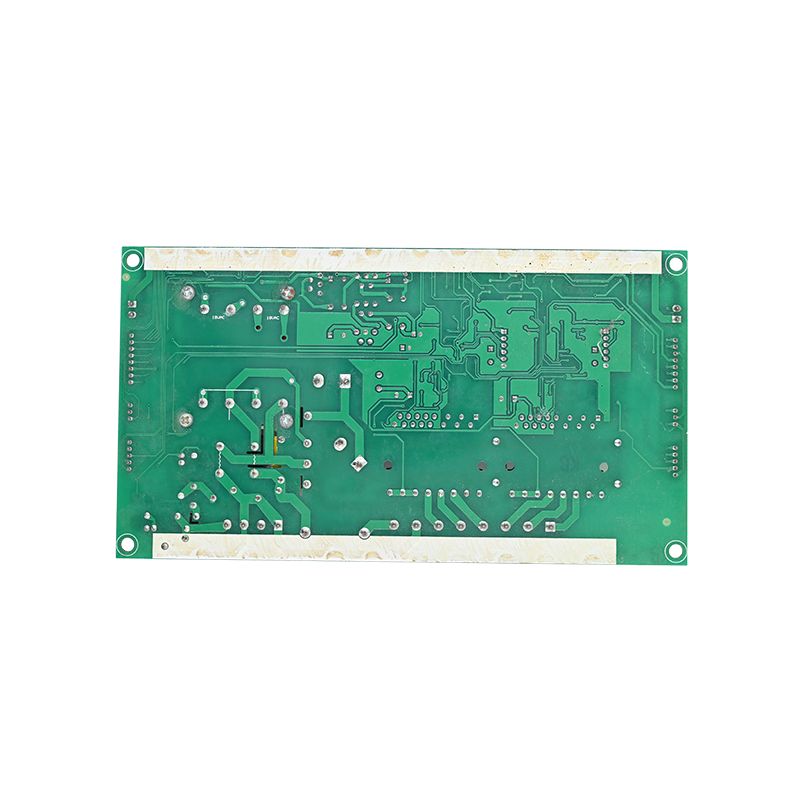
A newly developed modular PCBA design for baby monitors has recently captured significant attention within the industry. Built around a highly integrated ARM9 processor platform, this solution reduces system complexity while dramatically improving wireless transmission efficiency and image processing capabilities.
From Nursery to Living Room: How This PCBA Fits Into a Parent's 24-Hour Day
Many procurement professionals ask: "What does this PCBA actually look like when it's inside a finished product in a real home?" The answer lies in four everyday scenarios that resonate with parents around the world:
Scenario One: Silent Protection During Late-Night Hours At 2:00 AM, a baby stirs. Traditional monitors emit harsh indicator lights or piercing alerts that jolt half-asleep parents fully awake. With this PCBA-based design, parents can activate a single-button "sleep mode" that extinguishes all LED status lights and dims the screen backlight to its lowest setting. When the built-in cry detection algorithm triggers, the camera automatically switches to 0.1Lux low-light black-and-white night vision. The image remains crystal clear but gentle on the eyes. Parents simply glance at the handheld receiver screen—no harsh lights, no jarring sounds, just a quick check to see if the baby is stirring or truly awake.
Scenario Two: Smart Coordination Between Feeding Time and Naptime At 10:00 AM, the baby is napping in the crib while a bottle warmer runs in the kitchen. This PCBA supports external temperature and humidity sensors via dedicated GPIO pins. When the system detects the nursery temperature exceeding 28°C (82°F) or dropping below 40% humidity, the monitor can automatically trigger third-party smart plugs through its built-in control interface. For instance: turning on the air conditioner to cool the room or activating a humidifier. Parents no longer need to constantly check a separate thermometer—all environmental data appears directly on the receiver screen.
Scenario Three: Grandparent-Friendly "No-App-Required" Operation In many households, grandparents help with childcare, but complex smartphone apps and tiny on-screen buttons can be intimidating. This PCBA supports physical shortcut keys and a "plug-and-go" default mode—power on the device, and the transmitter and receiver automatically pair without any setup steps. If the baby cries unusually, the receiver's tri-color breathing light shifts from green to yellow to red. Grandparents can instantly gauge the baby's condition just by glancing at the color, with zero need to read a manual or fumble with a touchscreen.
Scenario Four: Unrestricted Movement in the Backyard or Multi-Story Homes On a sunny weekend afternoon, parents want to tend to the garden while the baby naps in the upstairs bedroom. This PCBA's 2.4GHz RF solution includes an external SMA antenna interface, achieving a tested line-of-sight transmission range of up to 280 meters (approximately 920 feet) in open environments. Even as parents move around the yard, the video stream remains smooth without stuttering. The system supports 16-channel automatic frequency hopping, ensuring that interference from a neighbor's microwave or wireless camera won't cause static or signal drops—a common frustration with budget monitors.
Core Technical Specifications
For B2B buyers, hard metrics drive decisions. Below are the standard configuration specifications for this generation of baby monitor PCBA:
Main Processor & Image Processing Unit
The solution employs an ARM926EJ-S core running at 200 MHz, featuring a dedicated hardware JPEG codec and an integrated CMOS camera interface. The critical advantage: image compression does not consume main CPU resources, allowing the system to smoothly process 30fps VGA-resolution video while maintaining ultra-low power consumption. In real-world use, this translates to fluid, artifact-free video when parents view the feed on a dedicated receiver or mobile device.
Audio & Sensor Subsystem
On the audio front, the PCBA integrates a 32-channel sound processing unit (SPU) with built-in ADC/DAC converters. This eliminates the need for expensive external Codec chips while still delivering clear two-way talk functionality with effective background noise suppression. Parents hear every breath and coo clearly, without the hum of a nearby air conditioner or street traffic. The board also reserves dedicated interfaces for external temperature/humidity sensors and infrared night-vision LED drivers, giving brand owners the flexibility to tailor configurations for different climates and lighting conditions worldwide.
Wireless Connectivity & Expandability
To accommodate diverse market needs regarding transmission distance and networking methods, the PCBA supports both 2.4GHz RF proprietary protocol and dual-mode Wi-Fi connectivity. The Wi-Fi version connects via SDIO or USB Host interfaces, enabling seamless cloud integration and remote viewing through smartphone apps.
Key Parameter Comparison Chart
The following table provides a clear, side-by-side comparison of the core modules and their real-world performance advantages:
| Functional Module | Technical Implementation & Specifications | Real-World User Experience Benefit |
|---|---|---|
| Core Processor | ARM926EJ-S, 200MHz clock speed | Instant menu response; volume/brightness adjustments feel snappy and lag-free |
| Video Encoding | Dedicated hardware JPEG codec | Seamless day/night mode transitions; captures every roll and stretch without motion blur |
| Memory Stacking | 1Mbx16 SDRAM MCP multi-chip package | Supports frame-to-frame comparison for motion detection alerts without buffering delays |
| Audio Processing | 32-channel SPU with integrated ADC/DAC | Filters out HVAC hum and outdoor traffic noise; transmits only the baby's voice |
| Physical Package | 64-pin LQFP package | Compatible with 2-layer PCB design; finished product thickness can be kept under 25mm |
A truly exceptional baby monitor PCBA requires not only a powerful processor core but also robust interference resistance and a manufacturable form factor. The solution outlined above strikes an optimal balance between performance and cost through highly integrated silicon and space-efficient packaging techniques. More importantly, it translates those technical specifications into the everyday parental experiences that truly matter: silent nighttime protection, smart environmental control, grandparent-friendly simplicity, and unrestricted mobility throughout the home.
Send Inquiry
-
Delivery Service



-
Payment Options