- English
- Español
- Português
- русский
- Français
- 日本語
- Deutsch
- tiếng Việt
- Italiano
- Nederlands
- ภาษาไทย
- Polski
- 한국어
- Svenska
- magyar
- Malay
- বাংলা ভাষার
- Dansk
- Suomi
- हिन्दी
- Pilipino
- Türkçe
- Gaeilge
- العربية
- Indonesia
- Norsk
- تمل
- český
- ελληνικά
- український
- Javanese
- فارسی
- தமிழ்
- తెలుగు
- नेपाली
- Burmese
- български
- ລາວ
- Latine
- Қазақша
- Euskal
- Azərbaycan
- Slovenský jazyk
- Македонски
- Lietuvos
- Eesti Keel
- Română
- Slovenski
- मराठी
- Srpski језик

Automobile PCBA: A Systematic Engineering from Reliability Pillars to Zero-Defect Manufacturing
The modern automobile is undergoing a profound transformation from a "mechanical product" to a "mobile intelligent terminal." In this evolution, the Printed Circuit Board Assembly (PCBA)—as the physical carrier and electrical interconnection core of Electronic Control Units (ECUs)—has become a critical determinant of vehicle performance, safety, and functional boundaries. Unlike consumer electronics, Automobile PCBA operates in an extreme environment characterized by high temperatures, severe thermal cycling, intense vibration, moisture, and electromagnetic interference. Its design and manufacturing thus constitute a rigorous scientific system spanning component selection, process control, and full-lifecycle quality traceability.
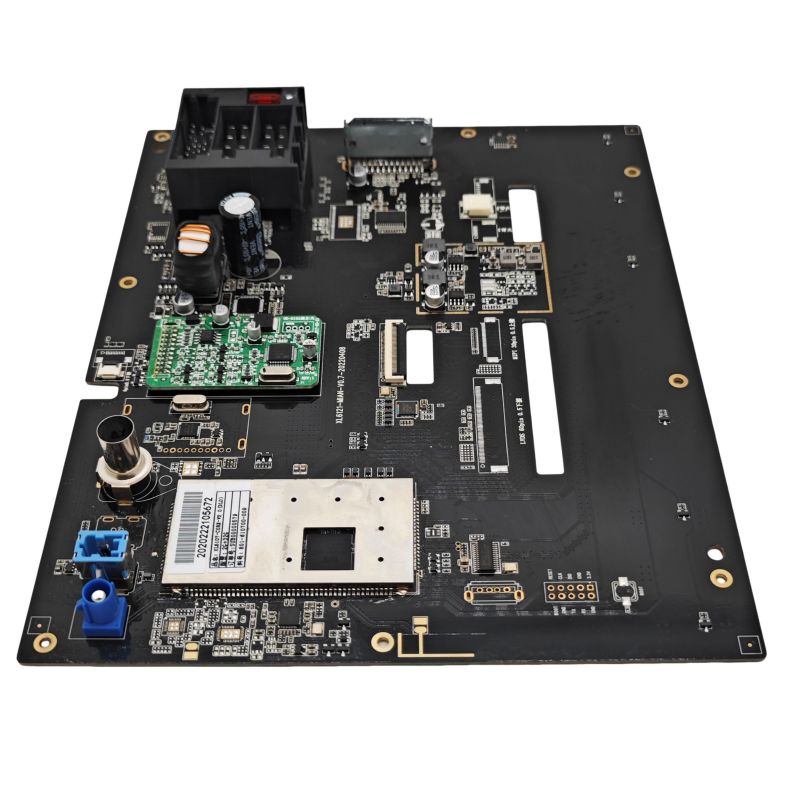
I. Stringent Top-Tier Standards: The Quality Moat Built by AEC-Q and IATF 16949
The reliability of automotive PCBA does not stem from reinforcement at a single stage, but is rooted in a top-down system of mandatory standardization. Among these, the AEC-Q series and the IATF 16949 quality management system form the two cornerstones.
The AEC-Q standards, established by the Automotive Electronics Council, provide component certification specifications with stringent test thresholds for different component types. For instance, AEC-Q100 focuses on integrated circuits (ICs), requiring them to pass tests such as temperature cycling, electromigration, and failure analysis. AEC-Q200 targets passive components (capacitors, resistors, etc.), subjecting them to thermal shock, humidity, and vibration tests to ensure their performance remains stable across a wide temperature range from -40°C to +125°C (and beyond). Any component that has not passed AEC-Q certification faces substantial barriers to entering mainstream automotive supply chains.
At the manufacturing system level, IATF 16949:2016 has replaced ISO/TS 16949 as the sole quality management standard for the automotive industry. Its core mandate is the mandatory implementation of the five core tools (APQP, PPAP, FMEA, MSA, SPC) to establish a closed-loop quality architecture. Specifically:
-
APQP (Advanced Product Quality Planning) requires DFM (Design for Manufacturability) reviews at the design stage to proactively avoid potential defects, such as "tombstoning" of 0201 small components or BGA (Ball Grid Array) pad design flaws.
-
PPAP (Production Part Approval Process) mandates that the Process Capability Index (Cpk) for Critical-to-Quality (CTQ) characteristics must be ≥ 1.67, meaning the process capability must far exceed general industrial standards.
-
FMEA (Failure Mode and Effects Analysis) systematically assesses the Risk Priority Number (RPN) of potential failure modes in SMT (Surface Mount Technology) lines—such as insufficient solder paste or BGA voids—and enforces mandatory corrective actions for high-RPN items.
Dual Assurance of Design and Process: Addressing Thermal, Mechanical, and Chemical Challenges
The physical challenges faced by automotive PCBA center on three areas: thermal management, mechanical stress, and environmental corrosion. This demands collaborative innovation in both design and manufacturing processes.
1. Thermal Management and Material Selection PCBAs located near engine compartments or power battery packs must endure prolonged high temperatures. To mitigate thermal failures, designers prioritize substrates with high Tg (glass transition temperature ≥ 170°C) FR-4 materials or polyimide, preventing the PCB from softening and deforming under heat. For high-power components, Metal Core PCBs (MCPCBs) or thermal vias combined with heat sinks are introduced to optimize heat dissipation paths. Additionally, PECVD (Plasma-Enhanced Chemical Vapor Deposition) plasma coatings—being thermally transparent—offer molecular-level protection without impeding heat dissipation, making them particularly suitable for compact high-power-density applications like domain controllers.
2. Mechanical Vibration Protection and Connection Reinforcement Vibration is a primary cause of solder joint fatigue failure. Design guidelines follow DFM principles: avoid placing large heavy components in stress-concentration zones, and prioritize SMT over through-hole components to reduce solder joint stress. For BGA packages that are susceptible to vibration, the Underfill process—filling the gap beneath the chip with adhesive to distribute stress—is implemented. This can improve impact reliability by several orders of magnitude. Furthermore, press-fit standards such as IPC-9797A provide specifications for connector reliability under vibration environments.
3. Conformal Coating and Corrosion Protection Moisture, salt spray, and chemical pollutants pose long-term corrosion threats to PCBA. Selective application of conformal coating is standard practice. However, for sensors or high-frequency signal links, traditional coatings may affect signal integrity or add thermal resistance. In such cases, nanotechnology-based molecular-level coatings (e.g., plasma coatings from P2i) offer a superior solution, providing anti-condensation protection without altering impedance characteristics. For high-density BGA regions, AXI (Automated X-ray Inspection) is relied upon to monitor solder voiding rates (typically required to be <25%) to prevent voids from becoming origins of corrosion or crack propagation.
Zero-Defect Manufacturing: Closed-Loop 3D SPI to MES Full Traceability
The core objective of automotive PCBA manufacturing is to approach "Zero Defect." This goal is achieved through highly automated inspection and real-time process control.
In the critical SMT stage—solder paste printing—statistics show that 60%–70% of defects originate from printing deviations. To address this, leading production lines adopt 3D SPI (Three-Dimensional Solder Paste Inspection) coupled with a closed-loop feedback system linked to the printer. When SPI detects a trend deviation in solder paste volume or height, the system automatically fine-tunes squeegee pressure or stencil release speed without manual intervention. This mechanism maintains the Cpk of critical parameters stably above 1.67. In subsequent stages:
-
AOI (Automated Optical Inspection) captures visual defects such as component shifts and bridging.
-
ICT (In-Circuit Testing) uses probe contacts to rapidly screen for electrical faults like shorts and resistance tolerances.
-
FCT (Functional Circuit Testing) simulates real-world operating conditions (e.g., 12V/24V power fluctuations) to verify the PCBA's functional integrity.
Crucially, end-to-end traceability is non-negotiable. As mandated by IATF 16949, the Manufacturing Execution System (MES) binds each component's batch number, placement parameters, reflow temperature profiles, and even X-ray images to the final laser-engraved unique UID of the PCBA. In the event of a field failure, the full production history can be retrieved within 60 seconds, enabling precise containment and root-cause analysis. This traceability capability is also increasingly vital for supporting "Right-to-Repair" regulations.
Application Stratification and System Integration
Automotive PCBA applications span multiple domains, from body control and powertrain to intelligent cockpits and autonomous driving. Each scenario imposes distinct priorities:
-
Body Domain (BCM, Body Control Module): Emphasizes I/O control and low power consumption, with cost sensitivity requiring balanced protection measures.
-
Powertrain and Safety Domains (ABS/ESP, Anti-lock Braking System/Electronic Stability Program): Demand extremely high response speed and extreme-environment tolerance, necessitating high-grade AEC-Q100 ICs and reinforced redundancy design.
-
Infotainment Domain: Prioritizes high-speed signal transmission (e.g., HDMI, LVDS) and electromagnetic compatibility (EMC), often employing HDI (High-Density Interconnect) or rigid-flex technologies to optimize signal integrity.
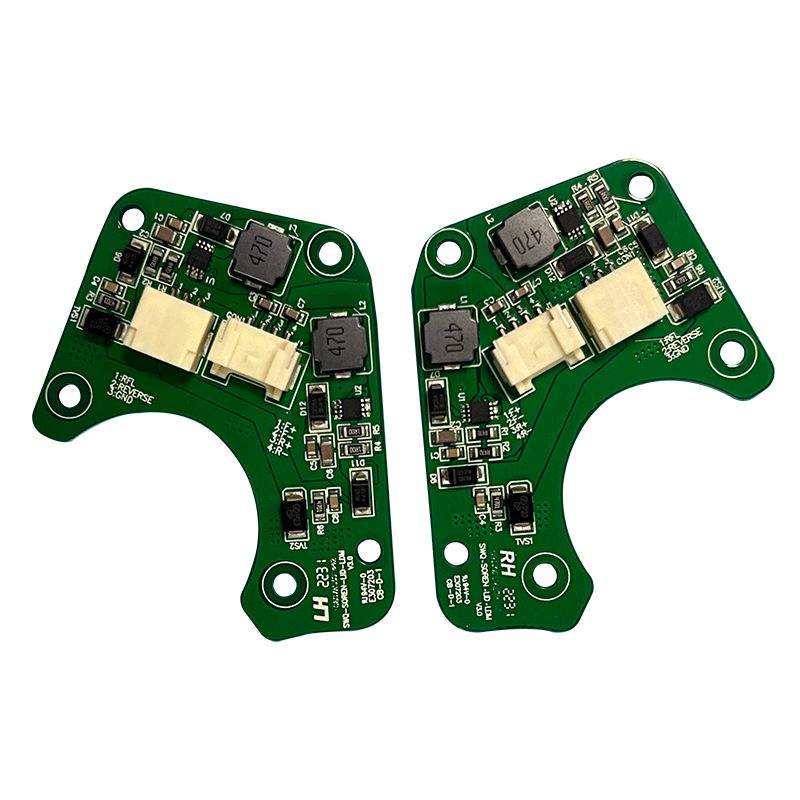
Automobile PCBA is, at its essence, a science of determinism. It establishes stringent standards through AEC-Q and IATF 16949 to filter reliable genes at the source; it endows hardware with resilience against harsh environments through specialized designs and processes targeting heat, vibration, and corrosion; and it locks in near-zero-defect process consistency in mass production through closed-loop SPC, AOI/X-ray inspection, and MES traceability. As automotive E/E (Electrical/Electronic) architectures evolve toward central computing platforms, PCBA must not only accommodate higher computing densities but also achieve redundancy and failure predictability within the functional safety framework (ISO 26262). Technological innovation in this field continues to drive the automotive industry toward safer, more intelligent, and more reliable horizons.
Send Inquiry
-
Delivery Service



-
Payment Options