- English
- Español
- Português
- русский
- Français
- 日本語
- Deutsch
- tiếng Việt
- Italiano
- Nederlands
- ภาษาไทย
- Polski
- 한국어
- Svenska
- magyar
- Malay
- বাংলা ভাষার
- Dansk
- Suomi
- हिन्दी
- Pilipino
- Türkçe
- Gaeilge
- العربية
- Indonesia
- Norsk
- تمل
- český
- ελληνικά
- український
- Javanese
- فارسی
- தமிழ்
- తెలుగు
- नेपाली
- Burmese
- български
- ລາວ
- Latine
- Қазақша
- Euskal
- Azərbaycan
- Slovenský jazyk
- Македонски
- Lietuvos
- Eesti Keel
- Română
- Slovenski
- मराठी
- Srpski језик

Motion Sensor PCBA Design Enters the "Micro" Era in 2026
When you approach your front door and the lights turn on automatically, or when you flip your phone and the screen rotates instantly – these seemingly magical scenes rely on one core component: the Motion Sensor PCBA.
With the explosive growth of IoT and edge computing, traditional motion sensing designs can no longer meet the extreme demands for miniaturization, ultra-low power consumption, and noise immunity. Between 2025 and 2026, this technology has reached a critical turning point: moving from "assembly" to true "integration."
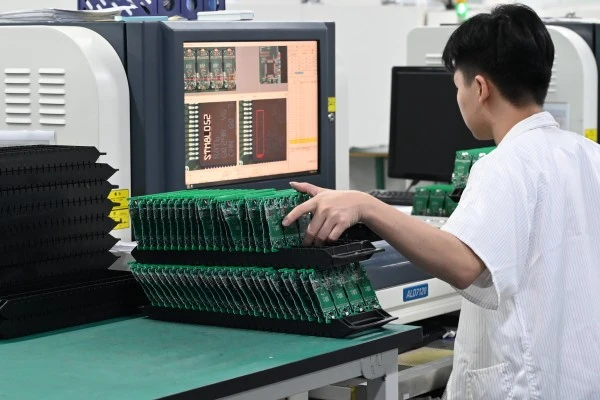
I. Goodbye, Clunky Designs: The Core Architecture of Integrated PCBA
Traditional motion sensor PCBAs often connected the sensor as a separate module via through-hole pins, leading to bulky volumes and signal delays. Today, the industry is shifting decisively toward integrated and embedded architectures.
According to the latest technical literature, modern high-precision motion sensor PCBAs now employ an Embedded MEMS Sensor Architecture. By laminating micro-electromechanical systems directly inside the PCB substrate, engineers have built a four-layer core system:
-
Sensing Layer: Laser micromachining creates precision micro-cavities inside the PCB for accelerometers or gyroscopes.
-
Signal Conditioning Layer: Integrated low-noise op-amps boost weak microvolt-level signals to usable levels.
-
Processing Layer: Embedded Cortex-M4 MCUs enable local data pre-processing, reducing reliance on the cloud.
The immediate benefits of this integrated design are a 40% or more reduction in volume and significantly improved noise immunity due to shorter signal paths – critical for smartphones and wearables.
II. Star Technology: The SMD Revolution in PIR Sensors
In the world of motion sensing, PIR (Passive Infrared) sensors remain the dominant solution for human detection. However, traditional PIR sensors were large, required through-hole soldering, and were a major obstacle to fully automated production lines.
This is now changing. With miniature reflowable IR sensors (pioneered by manufacturers like Murata), the industry has achieved a long-awaited breakthrough:
-
Fully Automated Assembly: These SMD components support standard reflow soldering. Production lines no longer need a manual workstation for this special sensor, enabling fully automated PCBA assembly.
-
Ultra-Low Profile: Compared to the traditional "large dome" lens design, the Z-axis height is drastically reduced, making ultra-thin smart lighting and hidden security devices possible.
- Smart Digital Output: Gone are the susceptible analog signals. New-generation sensors support I²C digital interfaces with configurable thresholds. They can effectively distinguish between a pet moving and a person intruding, drastically reducing false alarms.
III. Design In Action: How to Avoid the Three Traps of Motion Sensor PCBA?
Despite improving hardware, designing a robust motion sensor PCBA is not easy. Based on the latest 2025 design guidelines and case studies, developers must overcome three major challenges:
1. The Silent War Against RF Interference Modern motion sensor PCBAs often integrate wireless communication modules (Wi-Fi/Bluetooth). High-frequency RF signals can easily corrupt sensor signals. The solution: Implement partition isolation. Create a "sensitive zone" and an "interference source zone" on the PCB, maintaining at least a 5mm gap, and add a grounded metal shield over the sensor.
2. The Accuracy Challenge of Thermal Management Motion sensors, especially PIR types, are extremely temperature-sensitive. Temperature-induced false triggers are common. Modern high-end designs use high-Tg FR4 materials with micro thermal via arrays to quickly conduct heat away from heat-generating components (like LEDs or LDOs), ensuring the sensor operates in a stable thermal environment.
3. The HDI Process for Miniaturization To integrate a sensor, MCU, and power management within a 40mm × 30mm space, you need an 8-layer, 2-step HDI (High Density Interconnect) process. By using 0.1mm micro-vias and 01005 ultra-small components, designers can even expand the battery compartment while maintaining performance, thus extending device battery life.
IV. Market Trend: The Symbiotic Relationship Between Sensors and Semiconductors
Beyond consumer electronics, high-end applications for motion sensor PCBAs are expanding into semiconductor manufacturing and precision industrial equipment.
According to recent industry analyses, precision motion systems are becoming essential for backend semiconductor processes (packaging, testing). For example, piezoelectric sensors and precision robots are replacing humans in handling extremely fragile wafers and tiny loose parts. This requires the PCBA to have extremely high repeatable positioning accuracy and vibration immunity.
This marks a major evolution: the motion sensor PCBA is no longer just a "sensing" component, but the intelligent brain of a closed loop that "senses, processes, and acts."
Send Inquiry
-
Delivery Service



-
Payment Options