- English
- Español
- Português
- русский
- Français
- 日本語
- Deutsch
- tiếng Việt
- Italiano
- Nederlands
- ภาษาไทย
- Polski
- 한국어
- Svenska
- magyar
- Malay
- বাংলা ভাষার
- Dansk
- Suomi
- हिन्दी
- Pilipino
- Türkçe
- Gaeilge
- العربية
- Indonesia
- Norsk
- تمل
- český
- ελληνικά
- український
- Javanese
- فارسی
- தமிழ்
- తెలుగు
- नेपाली
- Burmese
- български
- ລາວ
- Latine
- Қазақша
- Euskal
- Azərbaycan
- Slovenský jazyk
- Македонски
- Lietuvos
- Eesti Keel
- Română
- Slovenski
- मराठी
- Srpski језик

Why Does a Reliable Planting Light PCBA Require Precision Thermal Management and Spectral Control for Continuous Horticultural Operation?
Horticultural LED fixtures operate under extreme conditions: 12‑16 hours of continuous daily use, high humidity, and significant thermal stress. The Planting Light PCBA from Unixplore Electronics is engineered to meet these demands with advanced thermal dissipation, precise current regulation, and wavelength‑accurate spectrum control. This article explores critical design considerations including material selection, copper weight calculation, driver topology, and environmental protection—offering practical guidance for engineers and growers seeking reliable, long‑life LED lighting solutions.
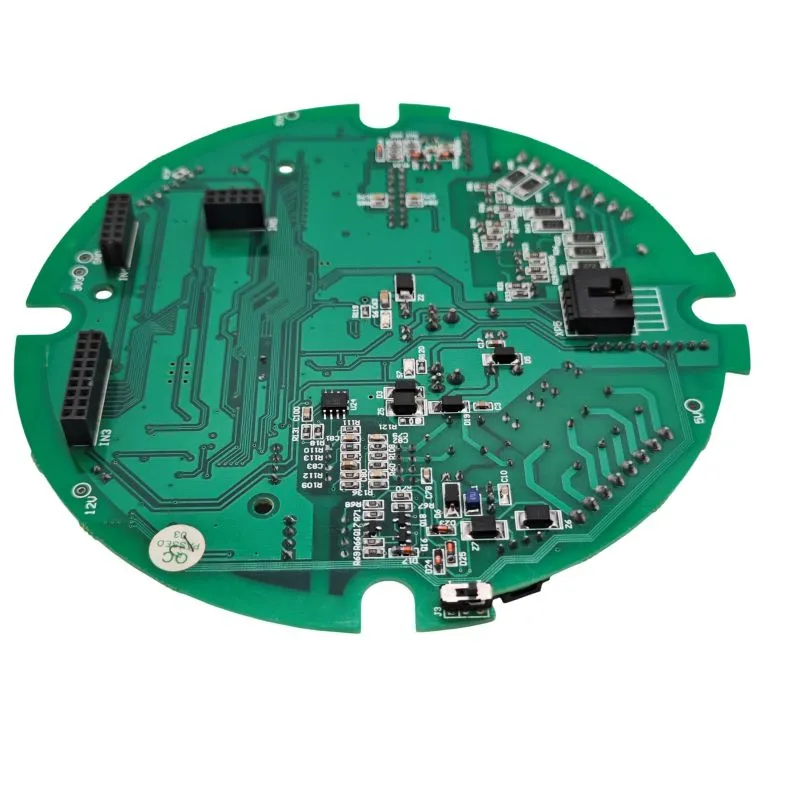
Why Planting Light PCBA Performance Directly Impacts Crop Yield and Energy Efficiency?
In horticultural lighting, the PCBA is not merely a component—it is the backbone of the entire fixture. Unlike general lighting, plant growth lights must deliver specific wavelengths (red for flowering, blue for vegetative growth) with high precision, while operating continuously for 12‑16 hours daily. Any failure in the PCBA—whether due to overheating, current imbalance, or moisture ingress—can result in crop loss, wasted energy, and costly downtime.
Unixplore Electronics brings over a decade of contract manufacturing experience to the design and production of planting light PCBAs. With capabilities spanning PCB design, SMT assembly, functional testing, and conformal coating, the company delivers turnkey solutions that meet the rigorous reliability standards of commercial horticulture. This article examines the key technical parameters and design rules that distinguish a durable planting light PCBA from a standard LED board.
Core Technical Specifications and Performance Requirements
The following tables outline the essential electrical, spectral, and thermal parameters for planting light PCBAs across different power levels and applications.
Spectral Requirements by Growth Stage
| Growth Stage | Dominant Wavelength | Typical Red:Blue Ratio | Application |
| Vegetative (leaves/stems) | 450nm (blue) | 3:1 to 4:1 | Lettuce, herbs, leafy greens |
| Flowering / Fruiting | 660nm (red) | 5:1 to 9:1 | Tomatoes, peppers, cannabis |
| Full Spectrum | 400‑700nm + white | Variable | Supplemental greenhouse lighting |
Electrical & Power Specifications
| Parameter | Low Power (Home/DIY) | Mid Power (Commercial) | High Power (Vertical Farm) |
| Total Power | 10W‑40W | 40W‑120W | 120W‑300W+ |
| Input Voltage | 12V‑24V DC | 45‑52V DC | 48V DC or AC 85‑265V |
| LED Current per Channel | 350mA‑700mA | 700mA‑1500mA | 1500mA‑2800mA |
| Current Deviation | ±5% | ±2% | ±1% |
| Power Conversion Efficiency | >85% | >90% | >93% |
Material Selection – Aluminum MCPCB vs FR4 vs Ceramic
The choice of PCB substrate directly determines planting light lifespan and thermal performance. Aluminum MCPCBs account for over 80% of commercial planting light PCBAs, offering the best balance of thermal conductivity and cost.
| Parameter | FR4 Standard | Aluminum MCPCB | Copper MCPCB |
| Thermal Conductivity | 0.3‑0.5 W/m·K | 1‑9 W/m·K | 200‑400 W/m·K |
| Copper Weight | 1 oz | 1‑2 oz | 2‑3 oz |
| Layer Count | 2‑4 layers | 1‑2 layers | 1‑2 layers |
| Maximum Operating Temp | 130°C (Tg) | 60°C surface | 70°C surface |
| Typical Application | Low‑power (<30W) | Most commercial lights | Extreme high‑power |
For high‑power continuous operation (200W+), aluminum MCPCB with minimum 3 W/m·K thermal conductivity is the recommended standard. Ceramic substrates (alumina or aluminum nitride) are suitable for extreme power density applications but cost 3‑5 times more than aluminum MCPCB.
Thermal Management – The #1 Reliability Factor
For every 10°C reduction in LED junction temperature, lifespan doubles. Proper thermal design is therefore the single most critical factor in planting light PCBA reliability.
Key thermal design elements:
• Thermal vias – Minimum 9 vias (0.3mm diameter) per high‑power LED, filled and capped for solderability.
• Copper area – 300‑500mm² heat spreading area per high‑power LED.
• Solder coverage – 80‑90% coverage on thermal pads with void area below 25%.
• Surface temperature – Below 60°C at LED pad area under full load.
• Thermal Interface Material (TIM) – Silicone or ceramic pad (minimum 3 W/m·K) between MCPCB and heatsink, 0.5‑1.5mm thickness with 20‑30% compression.
Proper thermal management ensures that planting light PCBAs achieve 50,000‑100,000 hours of operation in commercial environments.
Copper Weight and Trace Design for High‑Current Applications
Inadequate trace width is a common cause of overheating and premature failure in planting light PCBA. The table below provides guidance for selecting copper weight and trace width based on current requirements.
| Current | 1 oz Copper Required Width (ΔT=20°C) | 2 oz Copper Required Width (ΔT=20°C) | Recommendation |
| 1A | 30 mils (0.76mm) | 15 mils (0.38mm) | 1 oz acceptable |
| 2A | 70 mils (1.78mm) | 35 mils (0.89mm) | 2 oz preferred |
| 3A | 120 mils (3.05mm) | 60 mils (1.52mm) | 2 oz minimum |
| 5A | 220 mils (5.59mm) | 110 mils (2.79mm) | 3 oz recommended |
Professional recommendation: use 2 oz copper minimum for all traces carrying >1A. For traces carrying >3A, use 3 oz copper or add parallel traces with solder mask opening to increase current capacity.
Circuit Design – Constant Current Drive and Protection
Planting light PCBAs require constant current drive for each LED string to maintain stable wavelength and prevent thermal runaway. Common driver topologies include:
• Linear constant current – Best for low power (<30W), simple and low EMI, but inefficient at high voltage drop.
• Buck converter – Suitable for medium power (30‑100W), efficient (90‑95%), requires inductor.
• Multi‑channel constant current – Ideal for high power (>100W) and tunable spectrum, offering individual channel control.
Protection circuits are essential for reliable operation:
• Reverse polarity protection – Schottky diode or P‑FET.
• Over‑voltage protection – TVS diode clamped at 1.2x max input.
• Over‑current protection – PTC fuse or sense resistor with cutoff at 1.3x nominal current.
• ESD protection – Zener diodes on inputs to withstand ±8kV minimum.
Environmental Protection for Grow Room Conditions
Planting lights are often installed in high‑humidity environments (60‑90% RH). Moisture protection is mandatory for reliable operation. Unixplore Electronics offers conformal coating options to protect PCBAs from moisture, dust, and chemical exposure.
| Coating Type | Best For | Application Method | Reworkability |
| Acrylic (AR) | General horticultural | Spray or dip | Easy |
| Silicone (SR) | Extreme humidity, flexible PCB | Selective spray | Difficult |
| Urethane (UR) | Saltwater or chemical exposure | Spray | Very difficult |
Minimum coating thickness is 0.03mm (1.2 mils). For outdoor or high‑humidity greenhouses, IP65‑rated sealed connectors are recommended.
Manufacturing and Testing Capabilities
Unixplore Electronics Co., Ltd. operates a self‑owned factory of more than 3,000 square metres with 6 SMT production lines, 4 DIP assembly lines, and advanced testing facilities. The company's current annual production capacity exceeds 1,500,000 pieces of PCBAs and 150,000 sets of finished product assembly.
Quality testing for planting light PCBA includes:
• In‑circuit test (ICT) – Automated probe fixture to verify all components are present and correctly valued.
• LED polarity check – Automated optical inspection ensures 100% correct orientation.
• Thermal imaging – IR camera after 1 hour operation at full load; no hotspot >70°C.
• Spectral verification – Spectrometer with 0.1nm resolution confirms wavelength deviation ≤±5nm.
• Burn‑in test – 24‑48 hours at full power to verify no LED failure or flicker.
• Humidity resistance – 85% RH at 40°C for 48 hours, powered, with no corrosion or failure.
For commercial orders, PPAP documentation including thermal imaging reports and spectral verification data is available upon request.
Frequently Asked Questions
Q: What is the best PCB material for a high‑power (200W+) planting light that runs 18 hours daily?
A: For high‑power continuous operation, aluminum MCPCB with minimum 3 W/m·K thermal conductivity is the standard choice. For 200W‑300W+ fixtures, premium aluminum (5‑9 W/m·K) delivers 70,000‑100,000 hours of lifespan. Ceramic substrates are an alternative for extreme power density but cost 3‑5 times more.
Q: How do I calculate the required copper weight for my planting light PCBA to prevent trace overheating?
A: Use the formula: Width (mils) = Current (Amps) × 35 (for ΔT=20°C). For example, a 2.08A string requires 73 mils minimum width with 2 oz copper. Add a 20% safety margin: 88 mils. Use 2 oz copper minimum for traces carrying >1A, and 3 oz for traces >3A.
Q: What causes uneven light output or flickering in planting light PCBA, and how do I fix it?
A: The most common causes are current mismatch between parallel LED strings (thermal runaway) and insufficient bulk capacitance at the driver output. Solutions include using separate constant current drivers per string, adding balancing resistors (0.5‑2Ω), and adding 100‑470µF electrolytic capacitor across the LED output.
Q: Does Unixplore Electronics offer turnkey planting light PCBA assembly with conformal coating?
A: Yes. Unixplore provides one‑stop contract manufacturing services including PCB design, parts procurement, SMT & DIP assembly, programming, functional testing, conformal coating, and finished product assembly. The factory is ISO 9001:2015 certified and operates to IPC‑610E standards.
Q: What is the minimum order quantity for planting light PCBA?
A: Unixplore accepts small quantity orders with no MOQ. Whether you need prototype samples or mass production, the team can accommodate your requirements.
Q: How long does it take to produce a planting light PCBA order?
A: Production lead time depends on order volume and component availability. Please contact the sales team with your specific requirements for a detailed quotation and delivery schedule.
Conclusion
The Planting Light PCBA from Unixplore Electronics combines advanced thermal management, precise current regulation, and robust environmental protection to deliver reliable performance in demanding horticultural applications. With a focus on material selection, copper weight optimisation, and rigorous testing, these PCBAs are designed to achieve 50,000+ hours of operation in commercial growing environments. Whether you need a prototype or full‑scale production, Unixplore offers turnkey electronic manufacturing services to support your project from design to delivery. Contact the team today to discuss your planting light PCBA requirements and receive a tailored quotation.
Send Inquiry
-
Delivery Service



-
Payment Options