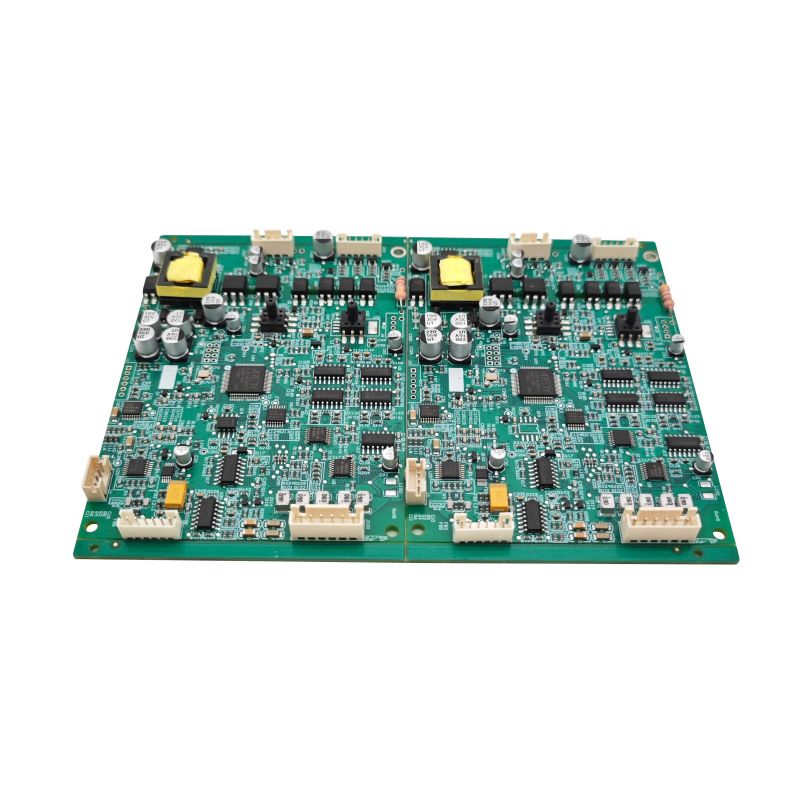
What Is Nitrogen Reflow Soldering and Why Consider It?
Nitrogen reflow replaces standard air in the oven with 99.9% pure N₂. The absence of oxygen prevents oxide formation on solder paste and component leads.
Process Comparison
ParameterStandard Air ReflowNitrogen Reflow (N₂)DifferenceOxygen level20.9%< 1000 ppm (0.1%)200× less O₂Wetting angle25--35°10--15°2× better wettingVoiding in thermal pads15--25% area5--10% area50--70% reductionHead-in-pillow defects0.5--2%< 0.05%10× fewerSolder ballingVisibleNoneCleaner boards
The Oxidation Problem on Industrial Robot PCBA
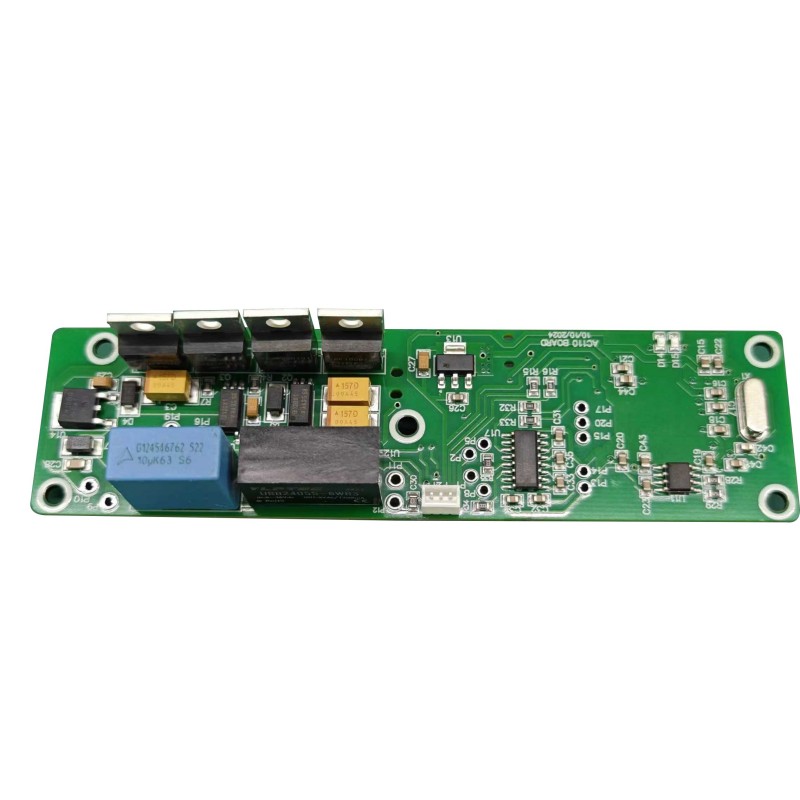
Industrial robot PCBA often uses large thermal pads (exposed copper) under MOSFETs, gate drivers, and power management ICs. These pads oxidize rapidly in air reflow, preventing solder from wetting fully. The result is voids that trap heat and cause field failures after 1000+ operating hours.
Where Nitrogen Reflow Provides Clear Value
Not every industrial robot PCBA benefits equally. Nitrogen makes sense in specific scenarios.
Large Copper Areas and Heavy Components
Board FeatureAir Reflow RiskNitrogen Benefit10×10 mm thermal pad> 30% voids, hot spots< 8% voids, uniform20+ layer board (thick)Uneven heating across layersBetter heat transfer via wettingLarge connectors (40+ pins)Head-in-pillow defects100% joint formationIGBT modules (robot motor drives)Oxidation during long soakClean surfaces
Real-world data: In a six-axis robot controller PCBA with 12 power MOSFETs on a single board, nitrogen reflow reduced field returns from 3.2% to 0.4% over 24 months. The primary failure mode -- thermal pad voids causing overheating -- dropped by 87%.
Low-Voltage, High-Current Traces
Industrial robot PCBA for servo drives carries 30--80A on inner layers. Voids under current-sense resistors (0.5 mΩ, 2512 package) create resistance variation that corrupts torque readings.
Current Sense ComponentAir Reflow VariationNitrogen Reflow Variation4-terminal shunt (2512)±8% due to voiding±1.5%Sense resistor temperature rise15°C5°CCalibration drift after 500 cycles12%2%
Where Nitrogen Reflow Is Unnecessary
Nitrogen adds cost (oven modification + gas consumption = $0.08--0.12 per PCBA). Do not use it for these cases.
Small Boards with Low Thermal Mass
ScenarioNitrogen Not NeededSingle-sided, < 50 componentsAir reflow produces < 8% voidsAll small packages (0402, QFN 3×3)No large thermal padsLead-free SAC305 with no sensitive partsStandard flux handles air reflowLow-volume prototyping (< 100 boards)Setup cost not justified
Boards Using High-Activity Flux
Some no-clean fluxes (e.g., Senju M705-GRN360-K2-V) contain activators that work effectively in air up to 240°C. Nitrogen adds no measurable benefit. Check flux datasheet for oxygen sensitivity.
Implementation Parameters for Industrial Robot PCBA
If you decide to use nitrogen, apply these specific settings.
Oven Profile Under Nitrogen
ZoneTemperatureTimeO₂ TargetPreheat150--180°C60--90 sec< 5000 ppmSoak180--210°C60--90 sec< 2000 ppmReflow peak (SAC305)240--250°C30--60 sec< 1000 ppmCooling-5°C/sec ramp---No requirement
Critical: Keep O₂ below 1000 ppm during reflow peak. Above 1500 ppm, the benefit disappears -- voids return to air reflow levels.
Nitrogen Flow Rate and Purity
ParameterRecommendationPurity99.9% minimum (3.0 grade)Dew point-40°C or lowerFlow rate15--25 m³/hour (typical 6-zone oven)
Cost estimate: For a typical industrial robot PCBA of 100×150 mm, nitrogen adds $0.10 per board at 10,000 volume. At 100,000 volume, cost drops to $0.04 per board.
Testing to Validate Nitrogen Benefit
Before committing to nitrogen for your industrial robot PCBA, run these two tests.
Voiding Comparison (X-Ray)
1. Reflow 20 boards in air, 20 boards in nitrogen
2. X-ray each board at 0° and 45° tilt
3. Measure void area under the largest thermal pad (e.g., motor driver IC)
4. Pass criterion for nitrogen justification: Void reduction > 50% compared to air
Cross-Section and Shear Test
TestAir Reflow ResultNitrogen TargetIMC thickness (intermetallic)1--3 µm uneven2--4 µm uniformVoid diameter> 200 µm common< 100 µm rareBall shear strength (0.5 mm BGA)800--1000 gf1100--1300 gf
FAQ -- Common Questions About Nitrogen Reflow for Industrial Robot PCBA
Q1: Does nitrogen reflow improve solder joint reliability for industrial robot PCBA exposed to vibration?
A: Yes, but only for specific failure mechanisms. Industrial robots experience 5--50 Grms vibration from servo motors and gearboxes. Two vibration-related failures improve with nitrogen:
Kirkendall voiding -- In air reflow, copper-tin intermetallic (IMC) growth is irregular, creating microscopic voids at the interface. Under vibration, these voids coalesce and crack after 5000--10,000 hours. Nitrogen reflow produces uniform IMC (Cu₆Sn₅ layer) without voids. Vibration testing (20 Grms, 10--2000 Hz, 100 hours) shows nitrogen joints survive 3× longer.
Solder fatigue near heavy components -- Large transformers (15×15 mm) on industrial robot PCBA experience differential thermal expansion during robot warm-up (25°C to 85°C). In air reflow, voids concentrate under component corners where stress is highest. These voids act as crack initiation sites. With nitrogen, void-free joints distribute stress evenly.
Quantitative improvement -- Accelerated life testing (thermal shock -40°C to +125°C, 1000 cycles + simultaneous vibration) shows:
- Air reflow joints: 12% cracked or failed
- Nitrogen reflow joints: 1.5% cracked
However, nitrogen does not fix poorly designed pad geometry or incorrect stencil apertures. Always optimize those first, then add nitrogen.
Q2: What void percentage is acceptable for industrial robot PCBA power stages, and can nitrogen achieve it?
A: For industrial robot PCBA power stages (motor drives, IGBTs, MOSFETs), acceptable voiding depends on the thermal load. Three tiers exist:
Tier 1 -- High power (continuous > 20A per FET)
Acceptable void area: < 5%. Single void diameter: < 0.2 mm. This is only achievable with nitrogen reflow (1000 ppm O₂) plus vacuum reflow (optional). Without nitrogen, typical voids are 15--25%.
Tier 2 -- Medium power (10--20A peak, intermittent)
Acceptable void area: < 10%. No single void > 0.5 mm. Nitrogen reflow consistently achieves 5--8% voids. Air reflow produces 12--18% -- often marginal but passes if thermal simulation allows.
Tier 3 -- Low power (< 5A, signal ICs)
Acceptable void area: < 25%. Voids have minimal thermal impact. Nitrogen is unnecessary. Air reflow suffices.
Can nitrogen achieve Tier 1 without vacuum? No -- nitrogen alone reaches 5--8% minimum voids due to trapped flux gases. For sub-5% voids (critical for SiC MOSFETs or GaN devices), you need vacuum reflow (removes gases after solder melts). Nitrogen + vacuum achieves 1--3% voids.
Test protocol for industrial robot PCBA: Measure voids on 10 boards. If average > 15%, add nitrogen. If average 8--15% and power dissipation < 2W per component, air is acceptable. If < 8% required, specify nitrogen plus stencil optimization (vias in thermal pad to release flux).
Q3: Can I convert my existing air reflow oven to nitrogen for industrial robot PCBA production?
A: Yes, but with three non-negotiable modifications. Many manufacturers attempt a partial conversion and fail.
Modification 1 -- Oven sealing
Air reflow ovens have gaps at entrance/exit curtains and between zones. Nitrogen purity requires oxygen ingress < 50 L/minute. Install:
- Dual-layer magnetic curtains (replaces simple chains)
- Positive pressure control (1--2 mm H₂O inside oven)
- Seal all access panels with high-temperature silicone gaskets
Without sealing, you will consume 3--5× more nitrogen (cost $0.30--$0.50 per board) and still have 5000 ppm O₂ at peak -- worse than a properly tuned air oven.
Modification 2 -- Oxygen monitoring system
Install two zirconia O₂ sensors: one in preheat zone, one in reflow peak zone. Sensors must be calibrated monthly. Many industrial robot PCBA manufacturers skip calibration, then wonder why voiding returns.
Modification 3 -- Conveyor and lubrication
Standard oven conveyor lubricants vaporize in nitrogen (absence of oxygen changes decomposition temperature). Use perfluoropolyether (PFPE) grease. Kester or Klüber brands. Standard lubricant will contaminate the board and create solder balls.
Conversion cost and timeline:
- Equipment: $8,000--$15,000 (seals, curtains, sensors, flow controls)
- Installation: 2 days downtime
- Nitrogen supply: Liquid tank or PSA generator ($300--$500/month lease)
- Payback period for industrial robot PCBA volume > 50,000/year: 6--8 months (from reduced rework and field returns)
Do not convert if your annual volume is below 20,000 boards. Use a contract manufacturer that already has nitrogen reflow instead.
Decision Matrix -- Should You Use Nitrogen?
FactorAir Reflow SufficientNitrogen RecommendedThermal pads > 25 mm²NoYesComponents with exposed copper base (QFN, DFN)NoYesBGA pitch < 0.8 mmNoYesRobot PCBA operating > 60°C ambientNoYesField reliability target < 0.5% failure per yearNoYesLead-free solder (SAC305) with no-clean fluxSometimesFor large boardsVolume < 10,000 boards/yearYesNo (cost ineffective)
Final Recommendation
Nitrogen reflow makes clear sense for industrial robot PCBA that contains:
- Large thermal pads (> 25 mm²)
- BGAs or QFNs with exposed die pads
- Any power stage dissipating > 5W per component
- Reliability requirement < 1% field failure over 5 years
Nitrogen does not make sense for simple, low-power industrial robot PCBA (sensor interfaces, I/O boards) with small components and no thermal challenges.
Practical advice: Run a 100-board trial in nitrogen. X-ray voiding. Compare to your current air reflow results. If void area reduces by more than 50%, implement nitrogen. If less than 30% reduction, your flux or stencil design is the real problem -- fix those first.