- English
- Español
- Português
- русский
- Français
- 日本語
- Deutsch
- tiếng Việt
- Italiano
- Nederlands
- ภาษาไทย
- Polski
- 한국어
- Svenska
- magyar
- Malay
- বাংলা ভাষার
- Dansk
- Suomi
- हिन्दी
- Pilipino
- Türkçe
- Gaeilge
- العربية
- Indonesia
- Norsk
- تمل
- český
- ελληνικά
- український
- Javanese
- فارسی
- தமிழ்
- తెలుగు
- नेपाली
- Burmese
- български
- ລາວ
- Latine
- Қазақша
- Euskal
- Azərbaycan
- Slovenský jazyk
- Македонски
- Lietuvos
- Eesti Keel
- Română
- Slovenski
- मराठी
- Srpski језик


Sensor PCBA
Sensor PCBA is one of supplier Unixplore Electronics' core product lines. Supported by a team of 20 professional R&D engineers, we specialize in applying HDI technology to sensor circuit boards. We can customize PCB layouts and assembly solutions based on the function, size, and performance requirements of different sensors, helping our customers achieve miniaturization, high precision, and long-term stable operation for their sensor products.
Send Inquiry
Product Description
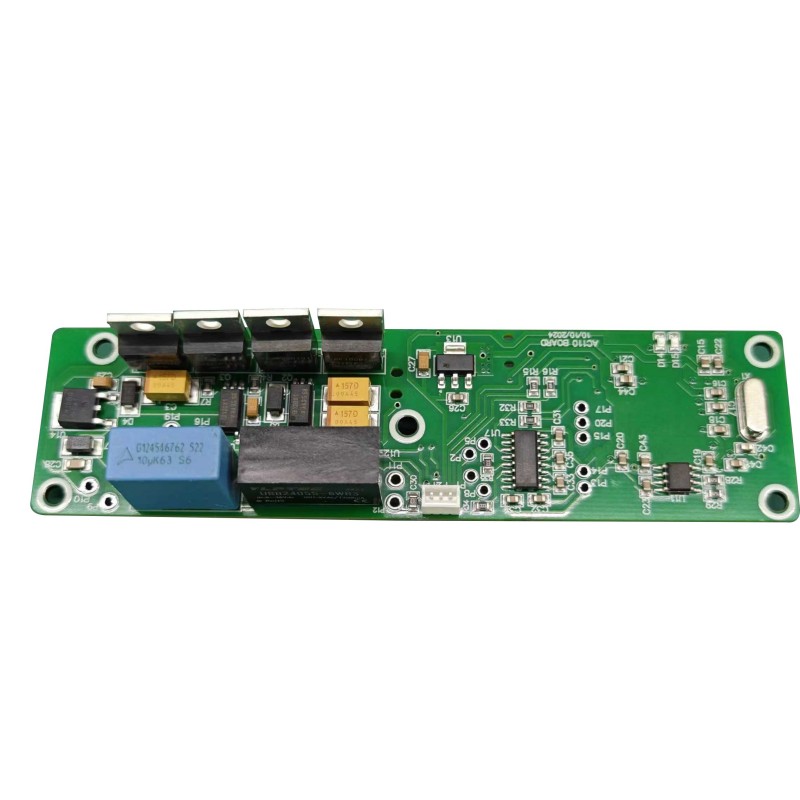
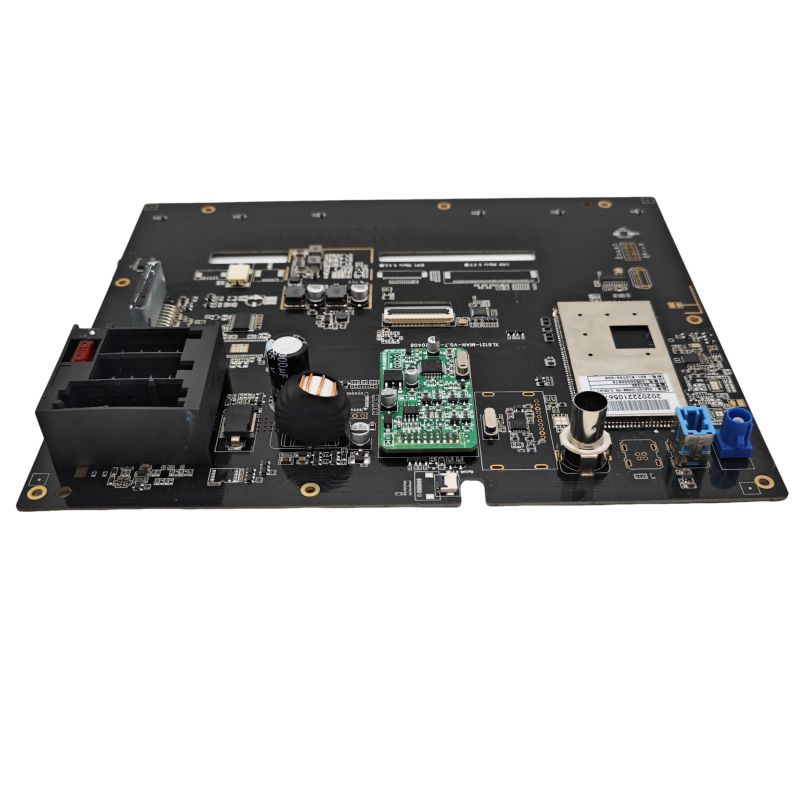
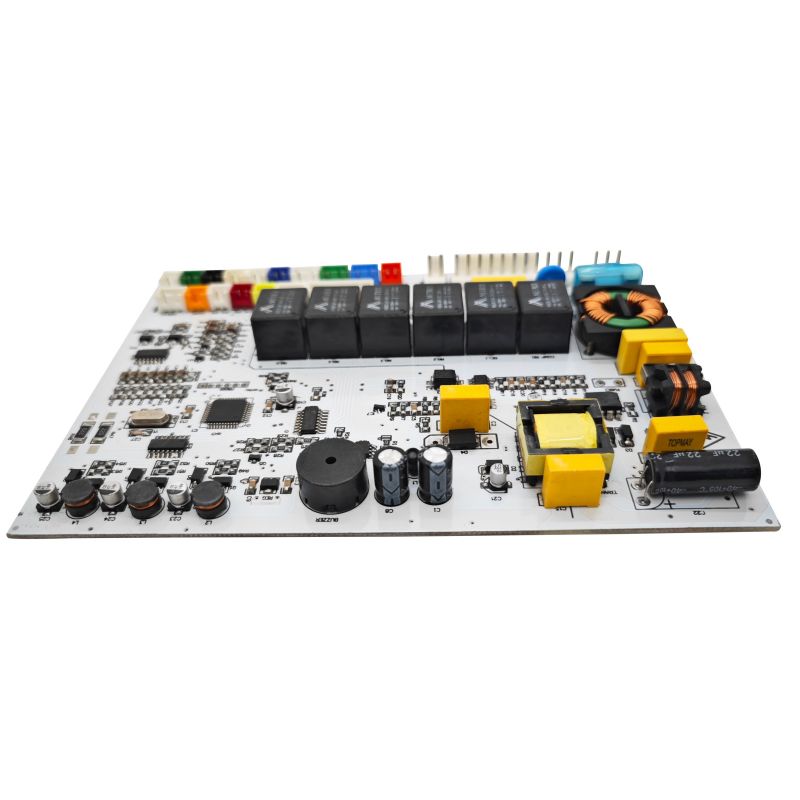
Sensor PCBA, or sensor printed circuit board assembly, is the "core control center" of various sensors. It achieves the functions of signal acquisition, conversion, transmission, and processing by precisely assembling electronic components such as sensor chips, capacitors, resistors, and connectors onto a customized PCB board.
Unixplore Electronics' Sensor PCBA is designed and manufactured using HDI (High-Density Interconnect) technology. Unlike traditional PCBs, it significantly improves the integration and space utilization of the circuit board through micro-vias, blind and buried vias, fine line width and spacing, and via-in-pad technology. This makes it particularly suitable for applications requiring small size, high precision, and high reliability, such as automotive tire pressure sensors, industrial temperature and humidity sensors, home appliance touch sensors, and medical blood oxygen sensors.

Core Technology:
To ensure the performance and reliability of the Sensor PCBA, we strictly adhere to HDI technology design specifications. From solution planning to manufacturing, every step focuses on "adapting to sensor needs and optimizing signal quality." The core process highlights are as follows:
1. Customized Requirements Analysis: Precisely Matching Sensor Parameters
In the initial design phase, our engineering team communicates extensively with clients to clarify the sensor's functional requirements, size limitations, operating environment, signal frequency, and other core parameters. This forms the basis for determining the number of layers, materials, and process route of the Sensor PCBA, avoiding over-design or insufficient performance.
2. Multilayer Board Stacking Design: Achieving Miniaturization and High Integration
Using a 4-12 layer HDI multilayer board stacking structure, blind and buried vias replace traditional through-holes, reducing the space occupied by the circuit board and optimizing the circuit layout to solve the wiring challenges of high-density components. This design allows the PCBA volume to be reduced by 30%-50%, perfectly adapting to miniaturized sensor products.
3. Fine Line Width and Spacing + Via-in-Pad Technology: Improving Space Utilization
Line width and spacing can reach 3mil/3mil, meeting the welding and wiring requirements of high-density components;
Via-in-Pad technology is used to design the vias directly under the component pads, significantly saving circuit board space and reducing signal transmission paths, thus improving signal integrity.
4. Selection of High-Quality Substrate Materials: Balancing Signal and Thermal Performance
Based on the application scenario of the Sensor PCBA, high-quality substrate materials such as FR-4 (for conventional applications), Rogers high-frequency laminates (for high-frequency sensors), and aluminum substrates (for high heat dissipation requirements) are selected to ensure that the circuit board has good signal integrity, heat resistance, and mechanical strength, and can operate in a wide temperature range of -40℃ to 125℃.
5. Power and Grounding Optimization: Reducing Electromagnetic Interference
Complete power and ground layers are designed in the multilayer board stack-up to form a shielding layer, effectively reducing power noise and electromagnetic interference (EMC), ensuring that the signals collected by the sensor are not interfered with, and improving the measurement accuracy of the Sensor PCBA.
6. Thermal Management Design: Solving Heat Dissipation Challenges
For high-power sensor components, thermal vias and copper ground planes are designed on the PCBA to quickly dissipate the heat generated by the components, preventing performance degradation or shortened lifespan due to high temperatures.

| Parameter | Standard Specification | Customization Range |
|---|---|---|
| Brand | UNIXPLORE | Support OEM Brand Logo |
| Product Name | Sensor PCBA | - |
| PCB Technology | HDI (High-Density Interconnect) | 1-2 HDI Layers, Microvia |
| PCB Layers | 4 Layers (Standard) | 2-12 Layers |
| Substrate Material | FR-4 (TG135/TG170) | Rogers, Aluminum Base, PI |
| Line Width & Space | 3mil / 3mil | 2mil / 2mil ~ 8mil / 8mil |
| Via Type | Blind/Buried Vias, Via-in-Pad | Through-Hole Vias (Optional) |
| Solder Mask | Green (Standard) | Black, White, Blue, Red |
| Surface Finish | ENIG (Standard) | HASL, OSP, Immersion Tin/Silver |
| Operating Temperature | -40°C ~ 85°C | -40°C ~ 125°C (Wide Temp) |
| Certification | ISO9001:2015, IPC-610E, RoHS, REACH | UL (Optional) |
| Assembly Process | SMT + DIP (Standard) | SMT Only / DIP Only |
| MOQ | 1 PCS (No MOQ) | - |

Production and Quality Control: UNIXPLORE's End-to-End Quality Assurance
The Sensor PCBA, as the core component of the sensor, directly determines the stability of the product. UNIXPLORE has established a comprehensive quality inspection system from "raw material procurement to finished product delivery" to ensure that every Sensor PCBA meets customer requirements:
1. Raw Material Procurement: Genuine Products Guaranteed, Traceable
We have established long-term partnerships with globally renowned component suppliers (such as TI, ST, and Infineon). All components are purchased through legitimate channels, providing original factory warranty certificates and material traceability codes to eliminate counterfeit and substandard products.
2. Production Equipment: High-Precision Automated Production Line
Equipped with advanced equipment such as Yamaha high-speed SMT placement machines, 10-zone reflow soldering ovens, and fully automatic AOI inspection instruments, we achieve automation in component placement, soldering, and testing. The placement accuracy can reach ±0.02mm, ensuring welding quality.
3. Triple Testing: Ensuring Stable Performance
Every PCBA undergoes the following tests before leaving the factory:
Electrical Testing: Flying probe testing / bed-of-nails testing to detect electrical faults such as open circuits and short circuits;
Functional Testing: Simulating the actual working environment to test the sensor's signal acquisition and transmission performance;
Reliability Testing: High and low temperature aging tests, vibration tests, and salt spray tests to ensure the product's adaptability to harsh environments.
4. Production Capacity: Meeting Diverse Order Needs
Currently, our annual production capacity reaches 1.5 million PCBAs and 150,000 finished products. Whether it's small-batch sample orders or large-volume mass production orders, we can deliver on time.
Related Category
Home Appliance PCBA
Industrial Control PCBA
Automobile PCBA
Consumer Electronics PCBA
Medical Equipment PCBA
Security System PCBA
Healthcare PCBA
LED Lighting PCBA
IoT PCBA
Electric Gardening Tool PCBA
Send Inquiry
Please Feel free to give your inquiry in the form below. We will reply you in 24 hours.